What is Communities of Hope?
Communities of Hope: Civic Media (CoH) is a journalism and civic media organizition on campus at Roger Williams University that primarily tells the stories of marginalized communities. These stories are shared among the community to bring communities closer together. I had the oppurtunity of working in the graphic design team – primarily operating and managing the website to share these stories. Our organizer Professor Bernardo Motta brought me along with this project alongside my partner to ultimately improve the accessibility and overall design of the website. This semester long project came with many difficulties- however this has definitely improved the lens I look through as a web designer. The experiences I have gained have further developed my client communications skills as well.
Beginning on the Site
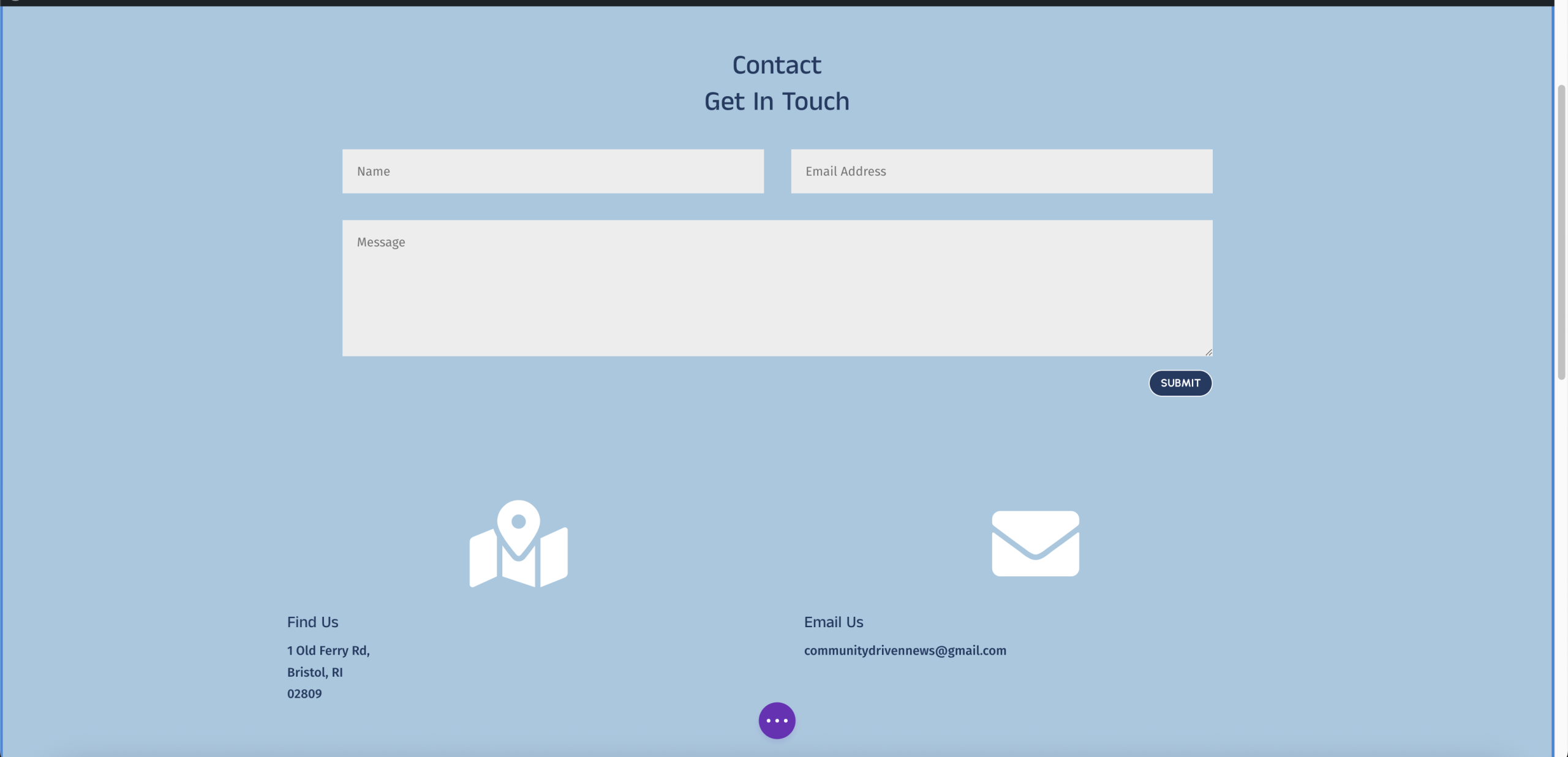
Before I began updating this website with my partner, I realized that many of the pages faced inconsistencies. Multiple pages followed color palettes that did not line up with the brand of CoH. This was because there were multiple people editing the website who did not know of the brand guidelines that we needed to follow. Further, there were inconsistencies with hierarchies that made content hard to follow along with. Below, you can see the differences between the before and after of recreating the Contact page on the website. I improved the hierarchy of the icon with the text to locate and email CoH. I also changed the color of the icons so that the white did not take away from the white text boxes to ‘Get in Touch’ with us. I had also updated a section underneath the contact section to subscribe to the newsletter that is creates and useful links that direct users to other sites similar to our work.


During this stage, my partner and I were faced with having to repost old stories that did not fit the brand identity while also updating the website with new content given to us by the editing team. We upload content for multiple projects and series – so this work was surprising. During this time, we primarly put our focus on updating the older pages to fit the brand identity and ensured that our new pages also followed these guidelines. We also noted that this site would run very slow, even when clearing the cache (which often leads to slow website runtimes). This was primarily because of the kinds of media files on our site. There were many large audio files and photos that simply were not being used.

Also in this beginning stage I added Divi Flash, a plugin extention for the theme Divi – which was already installed to our WordPress site. This allowed for access to more modules to make our website more unique. This also allowed for us to have a more effective way of sharing our Instagram feed that posts in correlation to episode releases and other events that CoH hosts.
Divi Flash is especially useful for the way that we can display images. This plugin has a justified gallery and an image carousel – which is great for multi-image posts or for images to take up slightly less space on a page.
Mid Semester Difficulties
Around mid – semester, my partner were faced with the largest setback when our original website had suddenly stopped working. Unfortunately, we were unable to fix it by any means. I reached out to my web development professor (who often works in WordPress) to attempt to resolve this issue, but we concluded that a bug within the website’s backend code made it so we could not make any more updates to the site. When trying to edit pages, they would go completely blank and we were unable to add, delete, or edit anything published to our site. To mediate this, a new website was created. My partner and I had to begin the entire website from scratch again. Thankfully with the help of my web development professor, we were able to identify that the original website had a bug in it and we placed precautions to ensure that it would not happen with our new website.
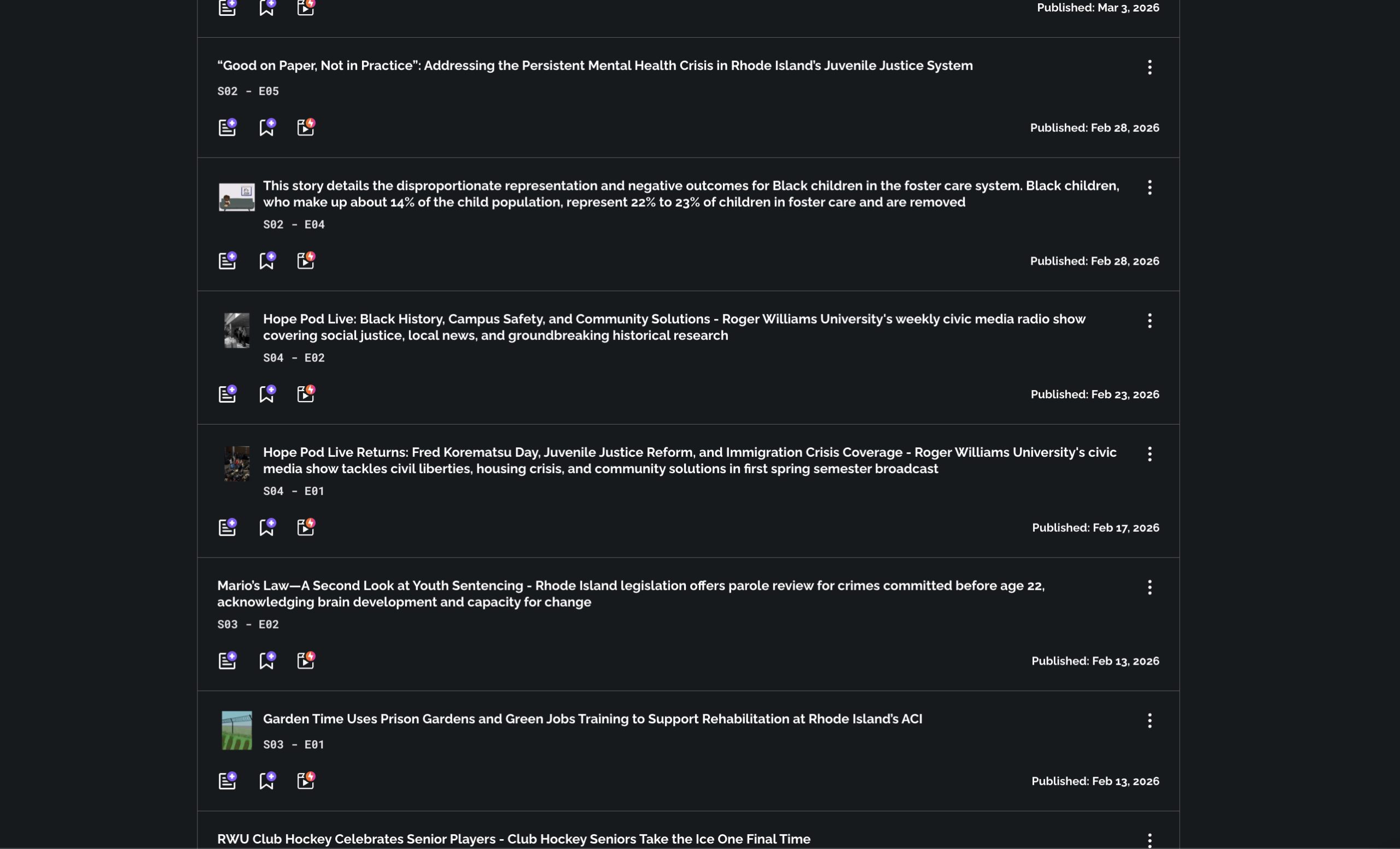
Thankfully, this setback allowed for us to rebuild the CoH website in a way that we were able to mediate what was and was not on the website. During this time, we also had gotten the log in information for RSS.com – an audio website for hosting podcasts – which we used to hold the large audio files. From there, we took the embedded code to the specific epsiode to put onto each page. This allowed for us to share all of the episodes without the worry of our website potentially running slow from large file sizes.
Additionally, we were able to retrieve all the images from our orignal site with a plug-in that my partner had found. This saved us a significant amount of time when rebuilding the site. We also still had access to the user end of the site, which was very helpful in being able to essentially copy and paste text. Although this setback was difficult and time consuming. It allowed for us to create a new site that was easier to manage.
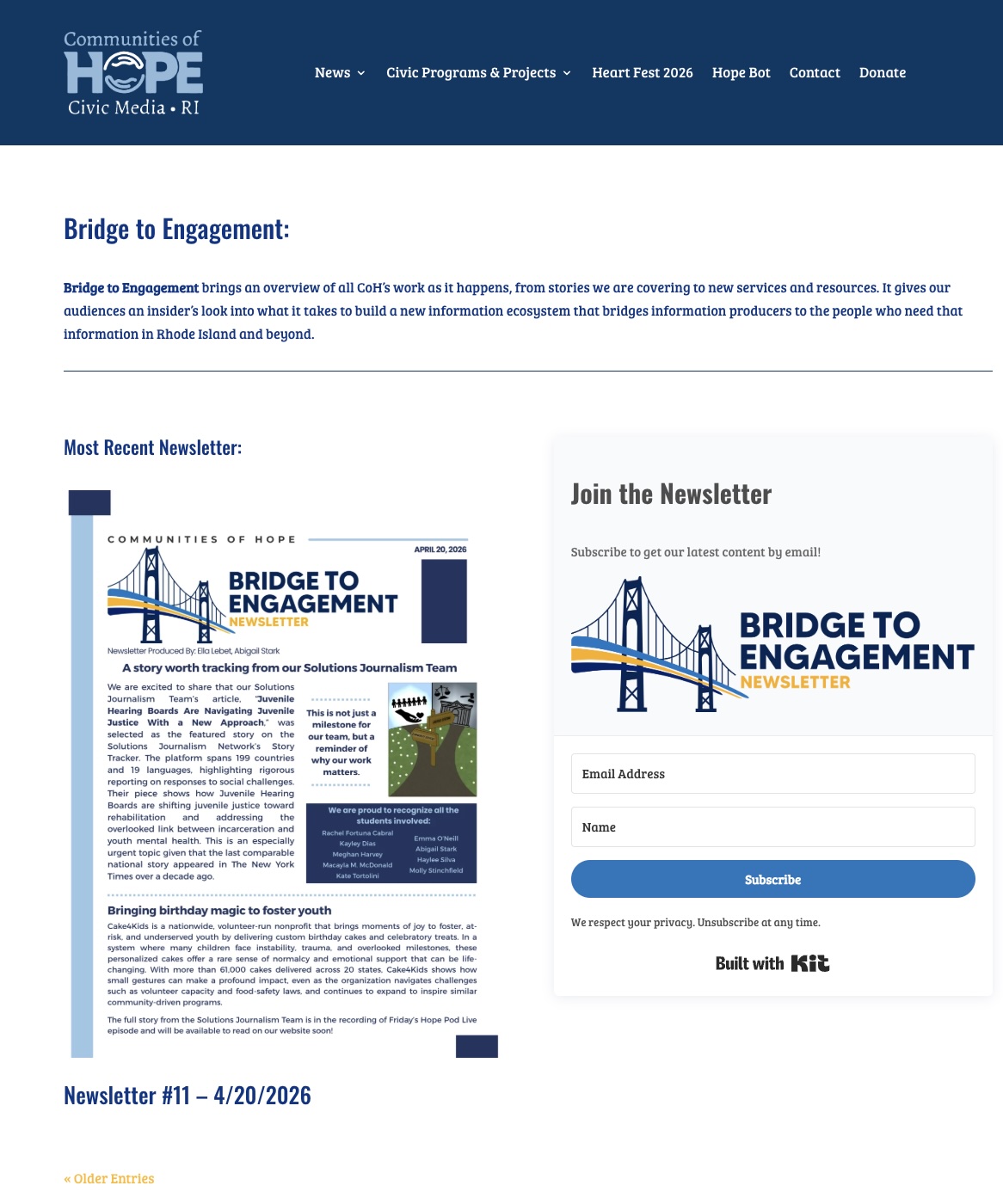
During this time, we also made a more engaging page for our newsletter. At the bottom of every page includes a place to subscribe to our newsletter. However, we also created a page that will update with every newsletter that is posted.
Once most of the content was back up, we began putting our focus towards making this website more accessible on devices other than a computer. Primarily, we wanted to ensure that the website would be accessible through mobile view. There were a few edits that needed to be made, but generally the modules allowed for the conversion between computer and phone to be easier.
Final Reflections
Working on this site has throughly taught be about the depths of web design – especially in instances where my client provides more creative liberty when creating pages to the site. Additionally, this internship has taught me to be confident in my own voice when consulting for what certain aspects of the website will look like. There were instances where my partner and I met with team leaders and Professor Motta to vouch for site pages to look a particular way. Our design mindsets worked differently than non-design mindsest, so these conversations were critcal for expanding the website and expanding our communication skills with future non-designer clients in the future.
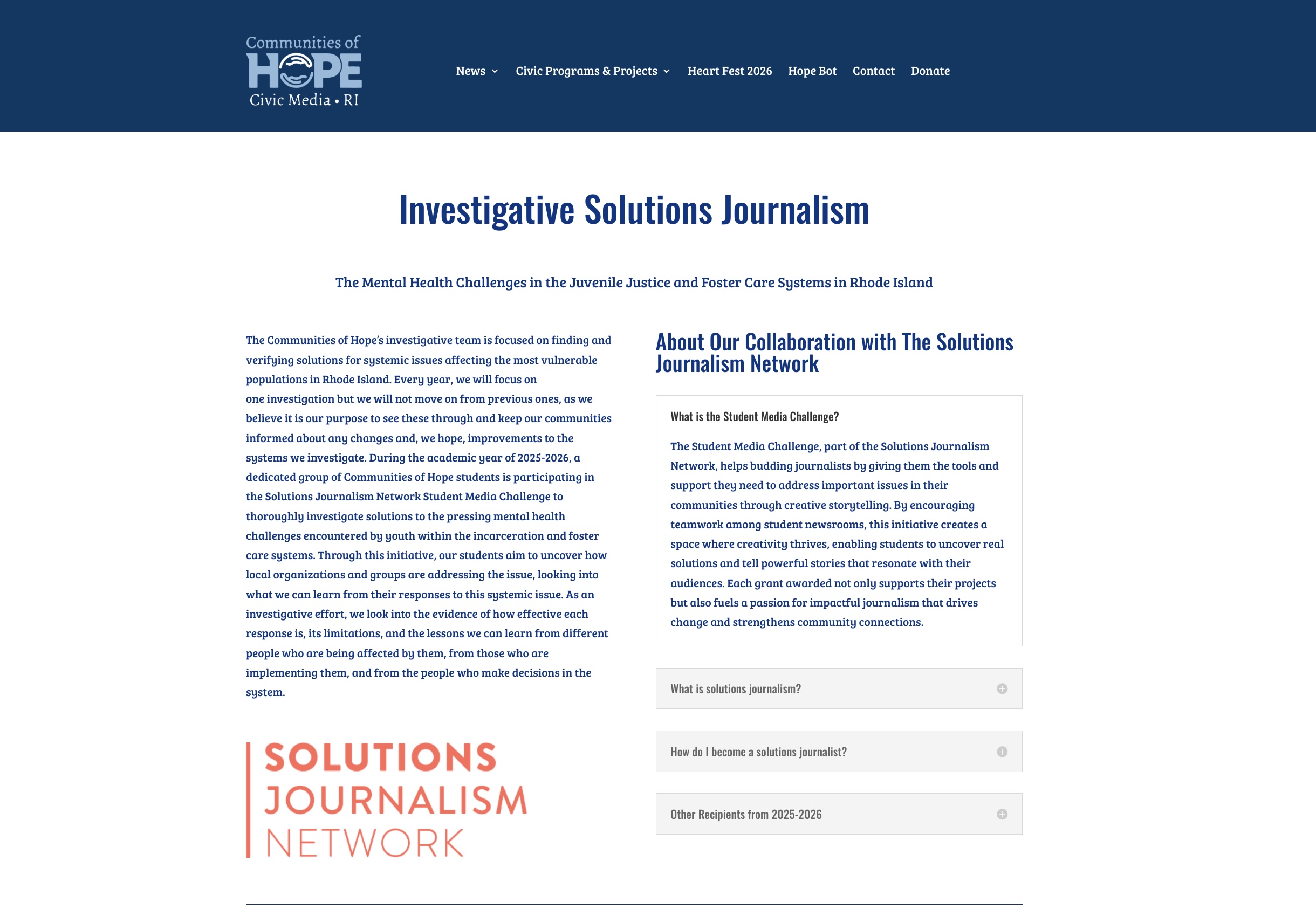

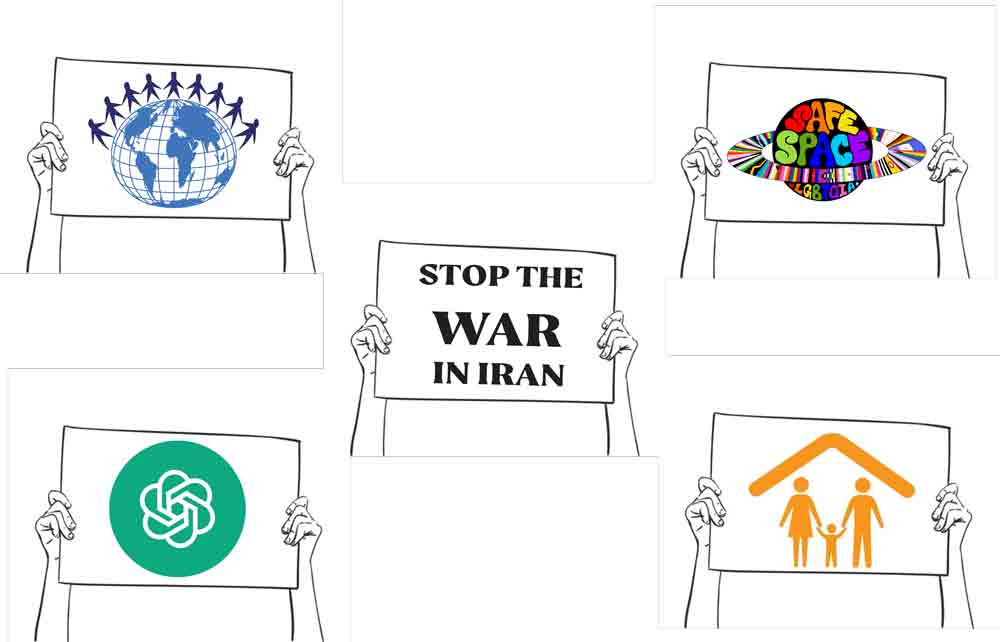
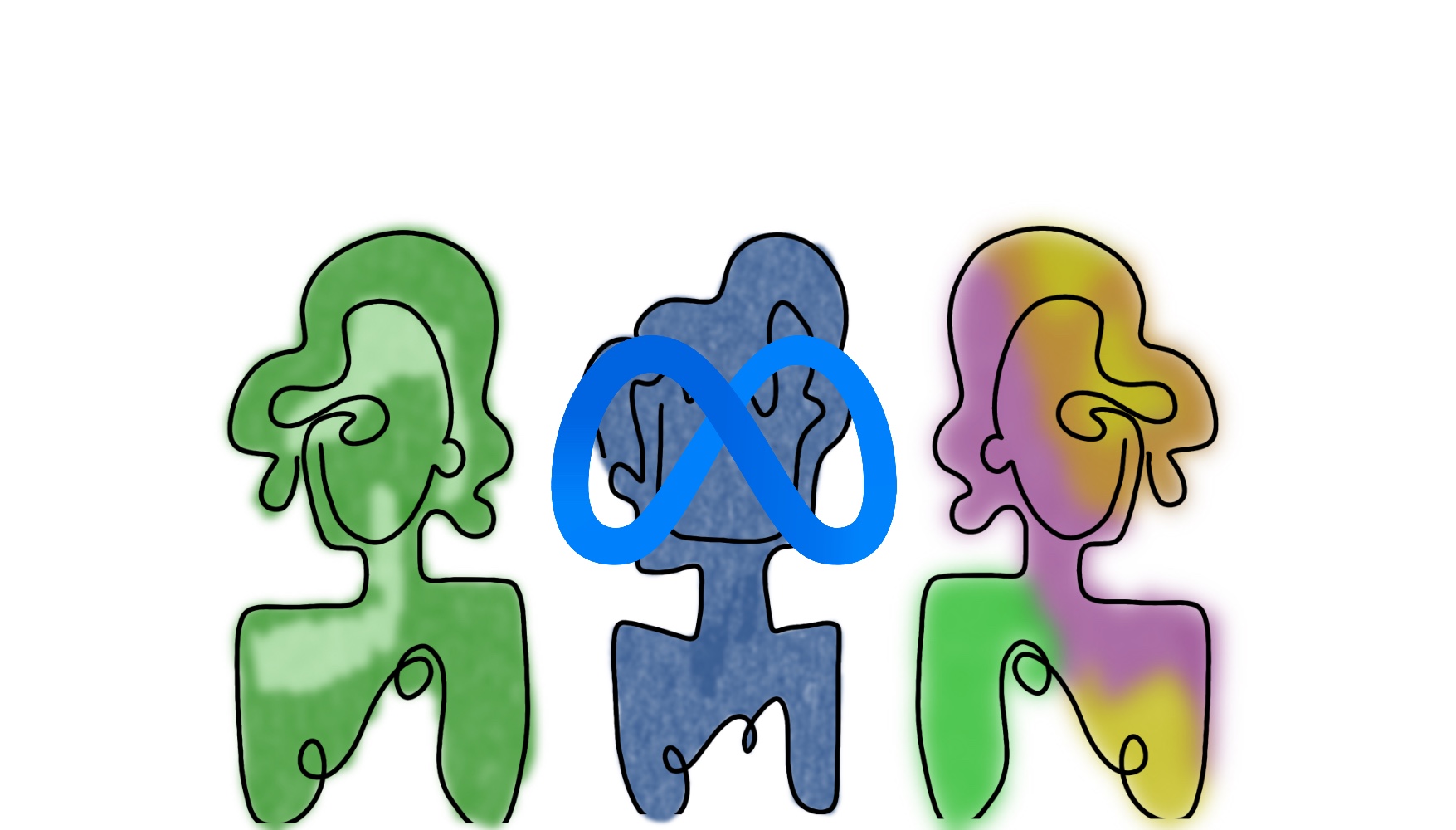
Towards the end of the semester I had also picked up on creating illustrations for stories. I created two for Hope Pod Live! and one for Solutions Journalism. These illustrations helped develop my illustration skills further in a professional context. I found that simplicity was key to creating these as creating illustrations with too much going on can take away from the importance of the story being told. I’ve come to understand that a little goes a long way in expressing how a story can be told through imagery. Many of these stories focus on various topics, so it is important to simplify the illustrations so that they can fit across all subjects.

HeartFest
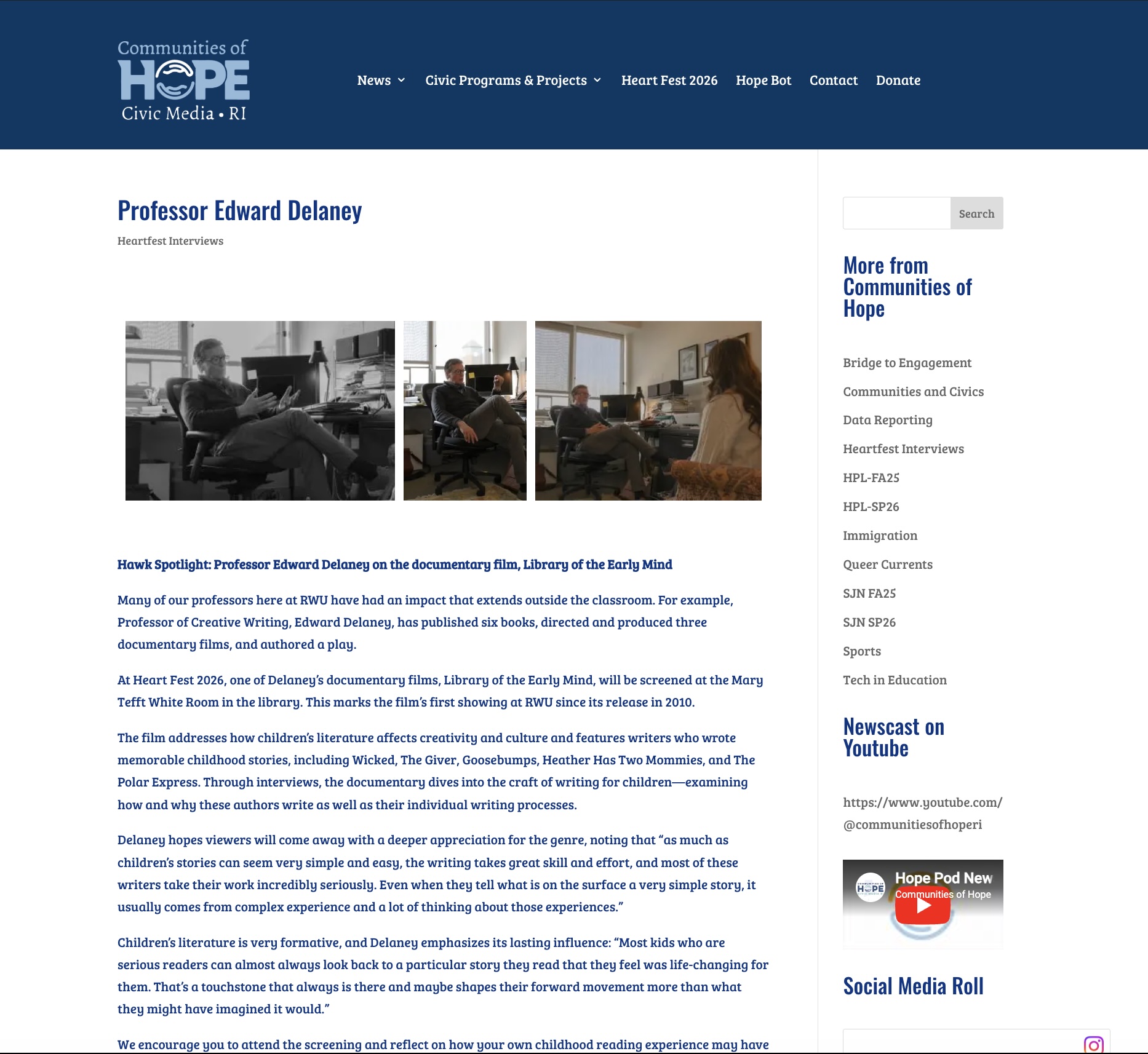
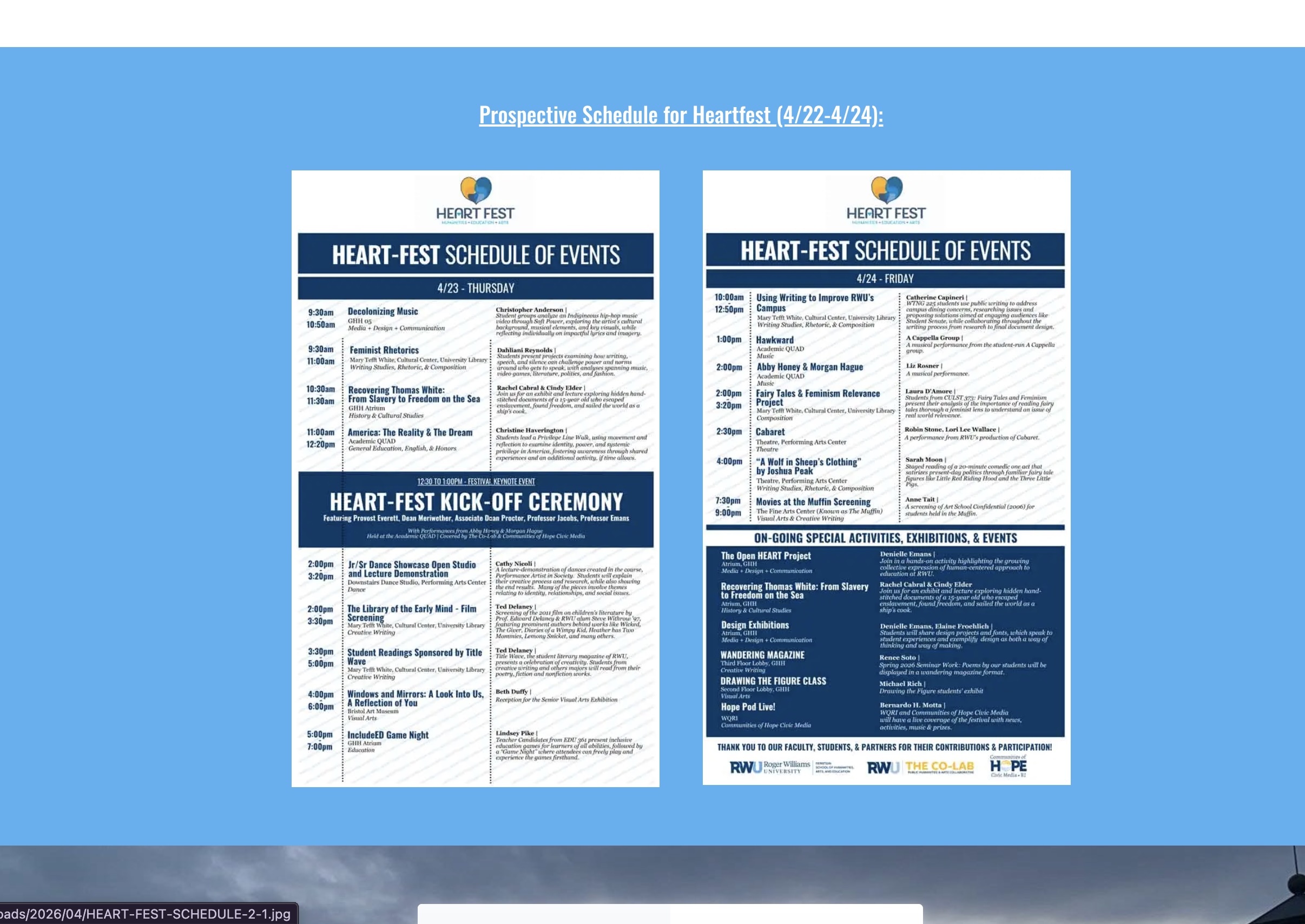
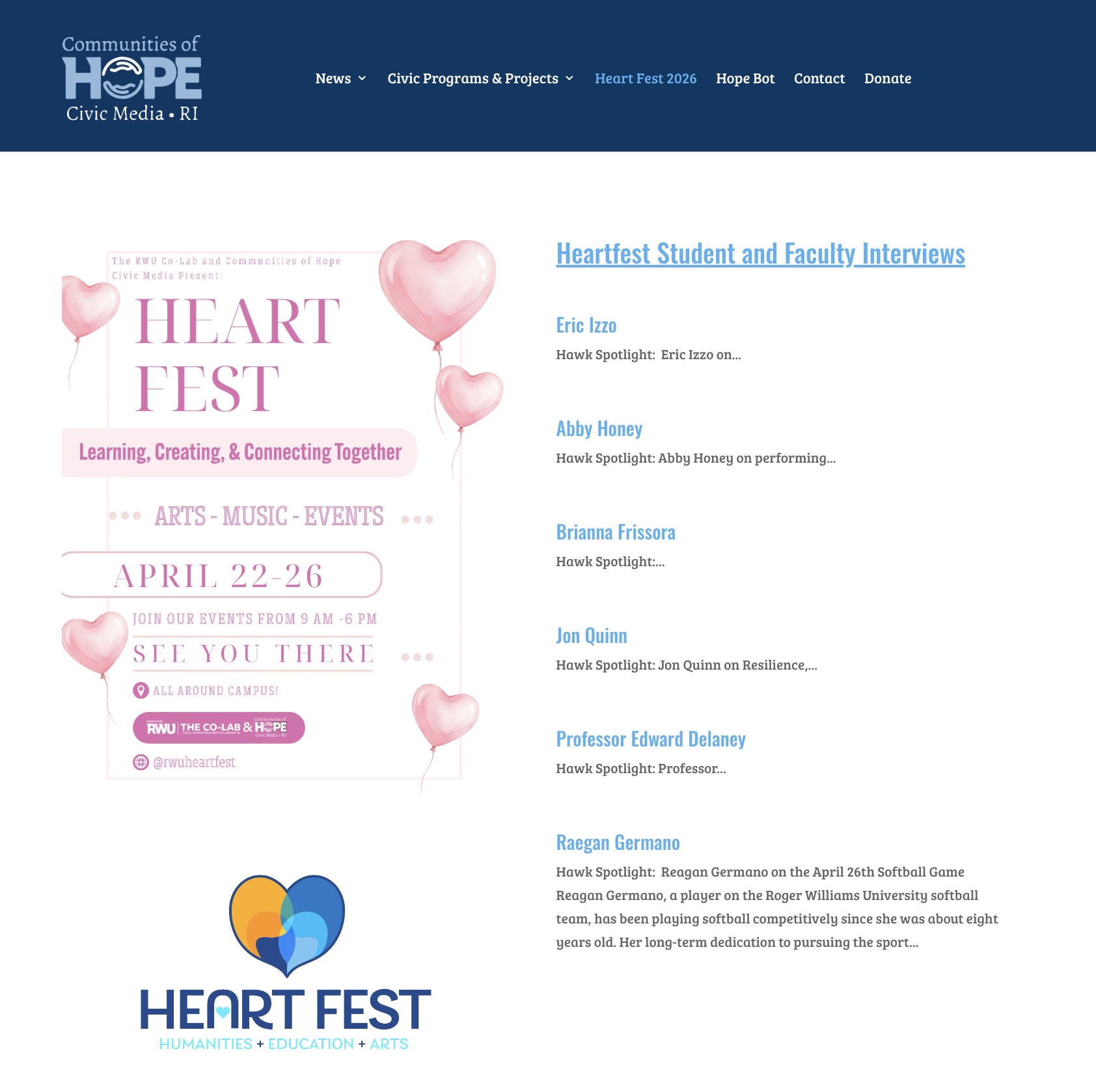
Toward the end of the semester, my partner and I, alongside the broader Communities of Hope team, contributed to the planning and execution of a two-day festival, Heart Fest, which celebrated the humanities, arts, and education. The event emphasized community engagement, creating a space for participants to share experiences and express appreciation for one another during a period of transition as our campus prepares to relocate to a new building. As part of our contributions, my partner and I published a series of interviews on the organization’s website, expanding access to the voices and perspectives of students and faculty.
In addition, I assisted in facilitating an interactive booth where students were invited to “draw their own heart.” Participants were provided with a heart template and encouraged to illustrate anything meaningful to them, fostering creativity and personal expression while strengthening a sense of community connection.
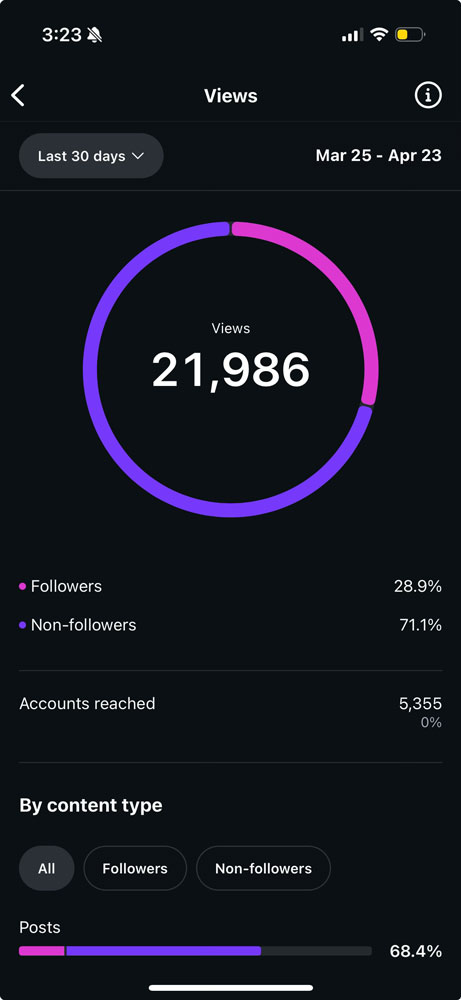
The festival was met with an overwhelmingly positive response from the community, which was clearly reflected in its digital engagement. The main Heart Fest webpage, along with the collection of published interviews, attracted significant public attention and experienced a high volume of traffic throughout and following the event. Visitors not only viewed the content but actively engaged with it, spending time exploring individual stories and sharing the page within their networks. This level of interaction demonstrated the effectiveness of our efforts to create meaningful, accessible content and highlighted the strong interest in community-driven storytelling. Overall, the website served as a successful extension of the festival itself, allowing its impact to reach a broader audience beyond those who attended in person.
Working with Communities of Hope: Civic Media has thoroughly improved the lens I work with as a graphic designer. I have learned to consult, communicate, and effectively design in a website setting. These skills have also reflected on my own personal website as I expand my personal brand. Throughout this experience, I have collaborated often with my partner to redesign and reenforce CoH’s website while maintaining its brand identity. Our biggest challenge of losing our original site and rebuilding from the ground up up was difficult, but that process ultimately strengthened my problem solving abilities and adaptibility. The changes that we developed helped improve the site’s overall runtime and functionality- which ensured a smoother and more accessible user experience. In addition, I developed stronger communication skills by reaching out to outside resources, including professors with more experience on the platforms we were using, which helped me overcome technical obstacles. As my partner and I stepped into leadership roles within the web design team, I also learned how to take initiative, guide others, and make decisions that impacted the direction and quality of our work.
Looking ahead to next year, I plan to build on this experience by taking on a larger leadership role across both the graphic design and web design teams. I hope to not only continue improving my own technical and creative skills, but also to support and mentor others as they develop theirs. By applying what I have learned about collaboration, communication, and adaptability, I aim to help create a more cohesive and effective design process across teams while continuing to produce meaningful and impactful work.
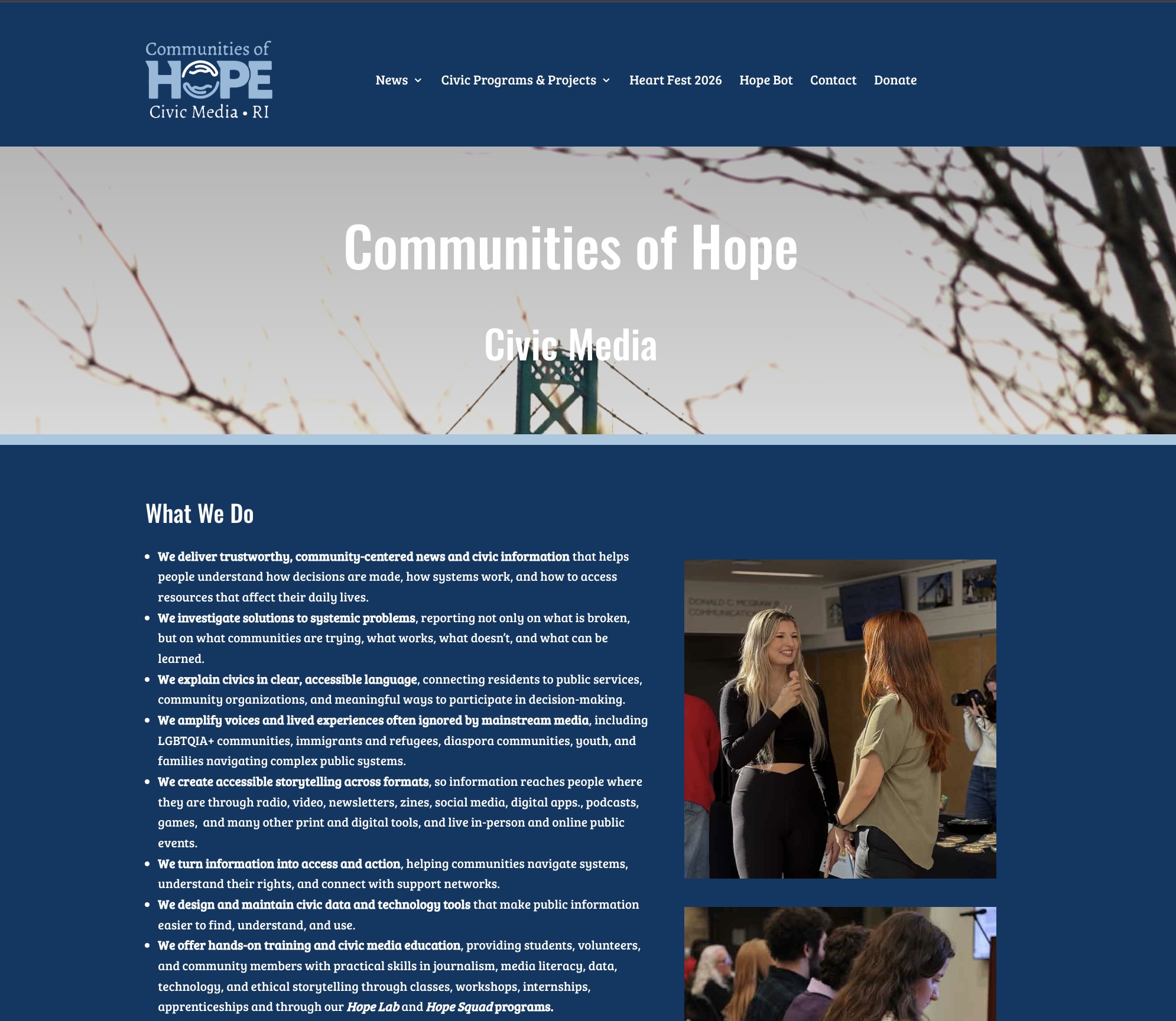
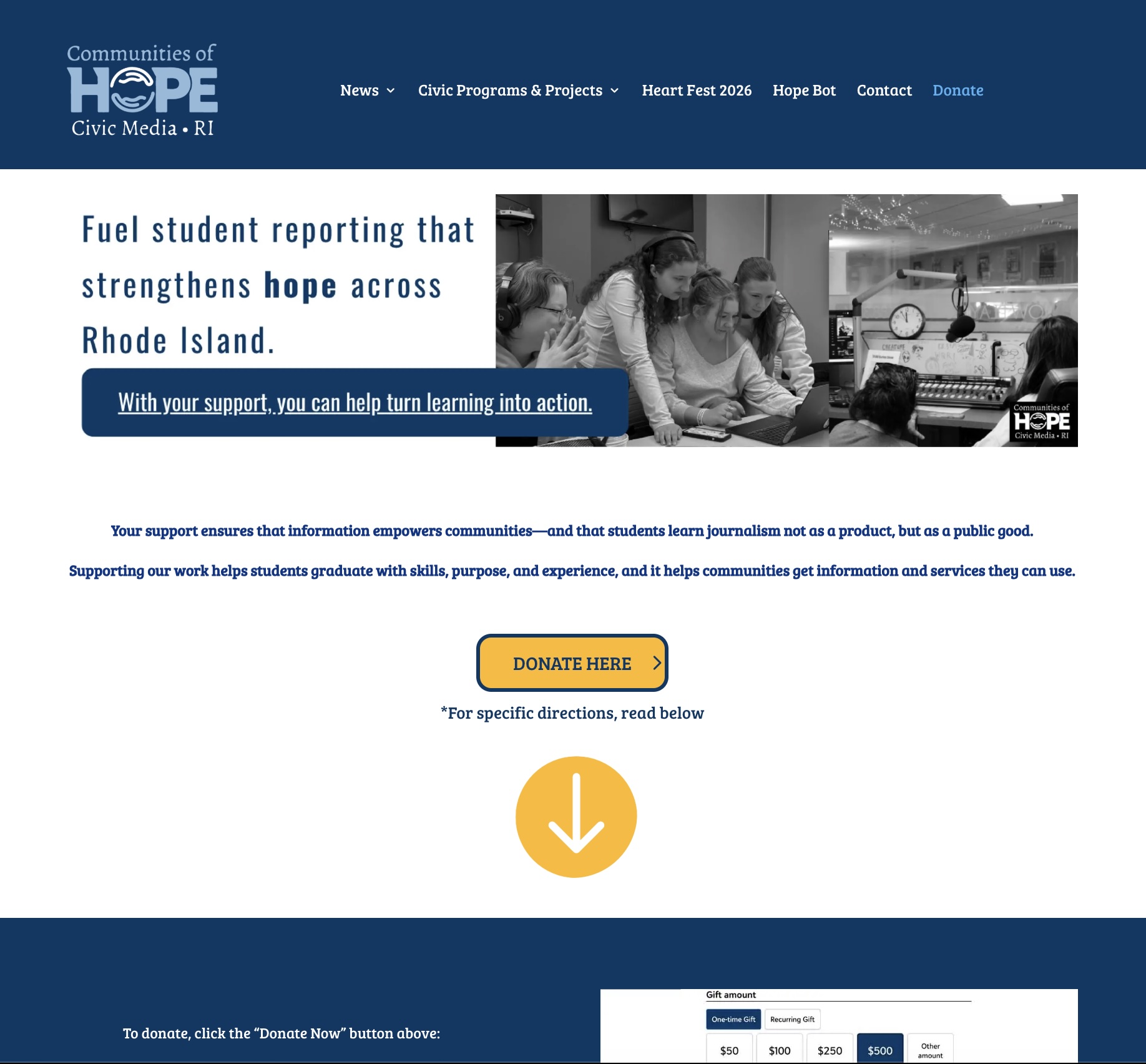
If you are interested in viewing the work I have done, please click on the button below. This project is on going and I will continue working with Communities of Hope in future semesters.